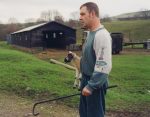
People of the Hills
A long-term documentation of life in the Upper Durham Dales, which was initiated in 1977 and continued through until 2006.
The work began to develop its current form with the photographs Grassick took during the 1993 Unclear Family international photography workshop in Crook, which he organised. His work in Co Durham was modelled on the idea of the area-based photography activist, producing work, creating a context for other production, organising exhibitions. Amber had wanted to extend the model to Northumberland, Cleveland, Tyne & Wear and Cumbria, but was only able to achieve it with Grassick’s work in Durham during the early to mid 1990s.
All images © Richard Grassick